Thursday, November 29, 2012

Féd pa lēeya

I'm not entirely sure where I heard this song yesterday, but it got stuck in my head and I ended up falling back on my flawless method for removing it (or at least rendering its irritating properties ineffective): translation.

"Sleigh ride" by Leroy Anderson and Mitchell Parish is translated below (and is singable, if you dare).  I may record this later; I'm not sure, though, as the only recording device I currently have access to is a camera and it's awkward singing to a little peeping eye.  The audio version might have to wait until I get my new laptop (which should be in a few weeks, hooray).

Perhaps I will translate more carols as the season goes on?

Order of texts: Sandic - Smooth English of Sandic - Original English

---
Sandic

**


Féd pa lēeya 

ta matenabin lēeya ybra,
kamatenin oahl
otaŵféd ra pa lēeya
iné bataen ba buce
bayum jéjé pal nât
tasnidan aŵ ŵiab ogre
otaŵféd ra pa lēeya
iné bataen ba buce

otaŵféd otaŵféd otaŵféd
iné pa jéjéb otaŵféd
pa úldib jéjéi aŵféd lēeya
otaŵféd otaŵféd otaŵféd
ufe me pa ufe pé
kalēanein lēeya aŵahl
kakantain lēain

gasan aŵ gréin oahl
pa lēeya katéwúin
pal aŵ aŵahl ŵhé
methîan kasein
ba ikuceab otaŵféd
iat kakantain
otaŵféd ra pa lēeya
iné bataen ba buce

then ba ivlú baahl
pal mead ba felokâ grré
sem baahl auzeri faé mohn auzoi
kantabin aŵtekant
otiab aŵmac gre kala ân kant
pal heon karaugin ta makmabin
kalein! red ole!


Lēain aŵahl, erini 
ŵian baneot ahl dék
troukâ aŵ zum úraj
kadamin
wena ma aŵ baahl ân stalob 
makania katema
jégú wenain ta aben
gre kala aŵtelēlét


----
Smooth English of Sandic


A trip in the sleigh


I hear the sleigh bells
and they are ringing
let's go in the sled
the weather is nice
outside there is snow falling
our friends are waiting for us
let's go in the sled
the weather is nice

let's go, let's go, let's go,
look, let's go into the snow
we're riding into snowy magic
let's go, let's go, let's go
my hand in yours
we're gliding in the sleigh
singing happily

the sides of our faces* are warm
(we are) happy in the sleigh
we're next to one another like
baby birds in love
let's go along the street
still singing
let's go in the sled
the weather is nice

There is a birthday party
at the place of the farmer "grey"
it is a good end to a good day
we will sing those songs
we like to always sing
at the hearth watching the chestnuts
jump!  they're jumping cooked!

We are happy,
money seems to mean little to us right now
our family is gathered here
eating (together)
the beauty of what we are doing is such that a picture
might be painted by some painter!
these beautiful memories
we will have for eternity.

---
Original English

Sleigh Ride

Just hear those sleigh bells jingling 
Ring ting tingling too. 
Come on, it's lovely weather 
For a sleigh ride together with you.


Outside the snow is falling 
And friends are calling 'Yoo-hoo.'
Come on, it's lovely weather 
For a sleigh ride together with you.


Giddy up, giddy up, giddy up, 
Let's go, Let's look at the show, 
We're riding in a wonderland of snow.


Giddy up, giddy up, giddy up, 
It's grand, Just holding your hand, 
We're gliding along with a song 
Of a wintry fairy land.


Our cheeks are nice and rosy 
And comfy cozy are we 
We're snuggled up together 
Like two birds of a feather would be.


Let's take that road before us 
And sing a chorus or two 
Come on, it's lovely weather 
For a sleigh ride together with you.


There's a birthday party 
At the home of Farmer Gray 
It'll be the perfect ending a perfect day 
We'll be singing the songs 
We love to sing without a single stop, 
At the fireplace while we watch 
The chestnuts pop. 
Pop pop pop. 


There's a happy feeling 
Nothing in the world can buy, 
When they pass around the chocolate 
And the pumpkin pie 
It'll nearly be like a picture print 
By Currier and Ives 
These wonderful things are the things 
We remember all through our lives.

---


* Sandic has no word for "cheek", so I used here the word "gas", "side of the face".
** Picture from here.

Wednesday, November 21, 2012

Happy Thanksgiving. :)

I am an impatient kind of person when it comes to learning.  If I am being taught something and I feel that my progress is too slow or that the material is being dumbed down for me, I'll go off on my own and try to find a more efficient way.


I'm impatient to the point that it is very difficult for me to accept instruction from others.  I tend to teach myself things that I want to know, not only because of the personal satisfaction I get out of guiding my own learning, but also because I am uneasy about being thought ignorant due to a lack of knowledge. :)
it's silly, of course, but this is the way I am.


After an incident this week in which someone was trying to show me something and I wanted to barrel ahead, I sat down with a calligraphy pen and scrawled this down.

Order of texts: Sandic - Gloss of Sandic - Smooth English of Sandic


Otefialēr ân san otoma fian
gezotob oteneot temra felē
skra man san op fian
lēé ta katiadin, otegre felē.


sugg-I-allow that knowledge should-they-do to.me
child-like-acc sugg-I-not fear-really I
because doings knowledge theirs to.me
O.you.pl the actv-help-adj-pl, sugg-I-wait I.


May I be accepting of instruction
and not be afraid of others thinking me less
because of the teaching that I recieve
O helpers, may I be accepting/patient.

Friday, November 16, 2012

I'm horrible.

Uploaded this to Reddit, completely forgot to post it here. >.>

This is Baljek, folks.

It liiiiiiiiiiiives (in a limited form and is only good so far for a handful of predetermined things)!


The script on the left is not mine.  It's one I found on omniglot.  That was part of the challenge I was doing- we had to pick and use another person's script.

The one to the right, though, is Baljek's own script.

Friday, November 2, 2012

Jia pérao baljekat!

:)  A little while ago I found a challenge on /r/conlang in which a person is supposed to develop a conlang to a "workable" point.  the goal is to have the conlang sufficiently developed by November 10th to translate the first paragraph of the Universal Declaration of Human Rights.

I decided that I'd put on my "challenge accepted" face and give it a shot!  My monster of choice is Baljek, Sandic's up-until-recently hardly-known cousin-language.

The Wytn equivalent of English's hybridness, Baljek has a Weyr substrate and a large number of Badis-language borrowings in the vocabulary.  The result of the crossbreeding of old Weyr and old Badis is Baljek, which sounds and looks quite a bit different than its southern cousin.

I present below the first six or seven McGuffey Reader exercises, which I've been using to help me flesh out the language's grammar.

----
Lesson I.

Lé kola
Lé kola te daen.
Lé kola so daen.
Lé kola daen.

Lesson II.
Lé meka.  Lé samer.
Lé meka daél to samer?
Lé meka daél to samer.
Lé meka te daél to samer.
Lé meka so daél to samer.

Lesson III.
Lé hîsa daél to ufei éka?
Lé gal alét hîsat.
Da daél pa ufei éka.

Lesson IV.
Lé tali ran daél to "box".
Lé nibo te daen dé "box".
Lé tal damal en?

Lesson V.
Jia pérao!  Raba jia pérao.  Anat jia pérao.
Jia pérao!  Egat alét rab.
Ana émal uj rabat?

VI.
Ana émal uj rabat.
Jia peerao! Egat é élét.
Ana émal res lî rabat.
Jia péén fiat l'iares rabat.


VIII.
Ned so aél l'atan ian lé tal.


-- On a side note, who thought it was a good idea to skip from "Can Ana catch Rab?" to "Ned has fed the chicken?"  What??  Simple verbs to complex past tenses??  Brain-breaker, that one!  I had only just puzzled out how I wanted to handle "let me ____" :p

Anyway, I can now use complex future and past tenses in Baljek!  Hopefully the Universal Declaration of Human Rights will get done this weekend before the deadline. :)

Wednesday, October 24, 2012

Paro - La Espero

Kicking around Youtube this evening, I found some songs in Esperanto.  Inevitably, I suppose, these two great conlangs in my life have finally met.  Certainly there was some pollination from Esperanto in Sandic's early days (The greatest example of influence I can think of off of my head is the inclusion of -ian (Esperanto -en) as an allative.), but carefully I kept the baby language incubated away from this larger, better-developed and loved language.

Now that Sandic stands on its own and hardly skins its own knees anymore, I've decided it's safe to play with others.

So when I found a video of "La Espero" and remembered the beauty of that song and the happiness it brought into my life during my learning of Esperanto, I thought- what better way to pay homage to the language that instilled in me the idea that a constructed tongue can be as wonderful and functional as a naturally-arising one by translating the best-known work in that language?

---


pa imprîab baxféd recsa nabei, 
ó imprîâ malēî paelai biab bamée.
lēacan ba lēyuc katiadi,  
dé mead meadian obaféd

---

Into the world came a new feeling
on the earth a strong call showed itself
by the wings of the helping wind
may it go from place to place.

Tuesday, October 16, 2012

Jae - Language


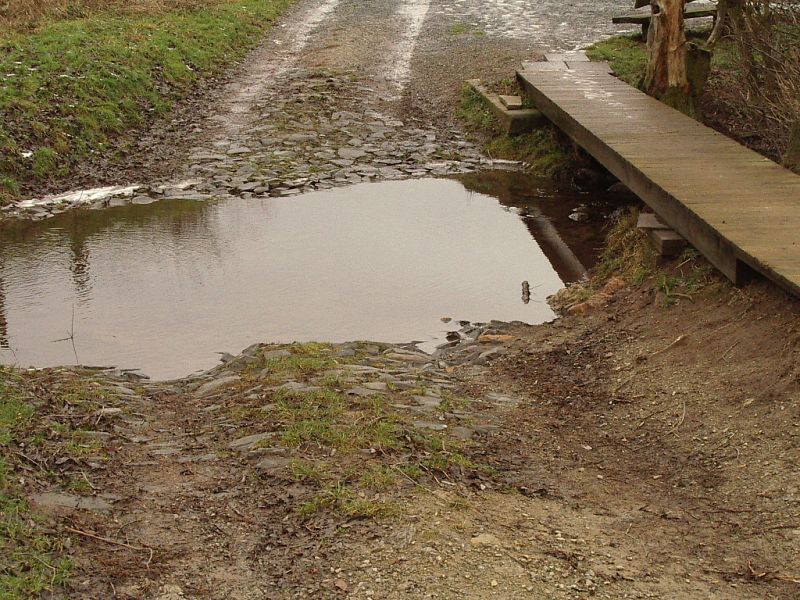
Found this on Reddit* last night and liked it so much that I actually sat down to think about how to handle the idea of a "ford" (turns out it's simple- "path through a river").  

Order of texts: Sandic -- Smooth English of Sandic

---


Jae baahl fiahc ba peradab ba srît dru
meadanian ta jutin bamée, lēiaia pet aŵ biab oxféd 
a biab kaneot méâ ân féd ba kémâ, kaevob erini katem

Language is a path across the river of time
it shows the way to the places of the others who went before our attempt
But that person cannot go along it who fears deep water.


* here and here.

Tuesday, October 9, 2012

Dabin erinin otiab opétade san! - Learn important things!

I forget what this story's original title was, but I do remember that I found it in an anthology of stories by the Brothers Grimm.  I never finished it, but rather left it at this level middle part.  I liked it because it dealt with "invented" languages.

This story was first translated in 2009, which makes it one of the first substantial things to have ever been written in Sandic.  This is the updated 2012 version, which I've re-done for the anthology that I will hopefully be finishing early next year. :)

Order of texts: Sandic - Smooth English of Sandic
---

Baxahl ân pa Kura kaxmect kémâ lēlai, wî ân jéd ba kémâ tré drialēzkab kaxlēlét nu. Ba drialēzka kaxahlra jémai, wî kaxneot méâ ân masan frn ân ma daniab.

Ada ka, kaxmî: “Iab opébra, pé ofoŵ me. Pian yneot méâ ân ma ân opésa frn ân ma daniab. Opéféd ébian, wî kémab opésu, faé me frnsai okaahl siad. Iad jéb ba kémâ opétade san ân ma daniab!”

Ba ada kaxgre ivlúb, wî eĵ safpaian kaxféd ba drialēzka, wî ba ada kaxbas: “Pé ofoŵ me, kiab péxade san?”

“Pé ada me, jaeactab ta kolén biab exade san!”

“Ah!” kaxmî ba kame lēlai, “Bal frn ba jaeact ta kolén péxma san?! Eĵ dé me ébian opéféd, wî eĵ opétade san ân ma daniab!”

Eĵ kaxgre ba ada ba tavel jémai, wî lēiaia ivlú, eĵ safpaian kaxféd ba drialēzka.

Eĵ kian kaxmî ba ada: “Pé ofoŵ me, kiab péxade san?”

Rial kaxmî ba drialēzka: “Jaeactab ta thîân biab exade san!”

“Pé ba jémarai! Ivlúbin oahl jé otiab exgre ân opéma san frn ân ma daniab, a nu péxade san jaeactabin ujinin! Opéféd éj ébian- a fî ân gre ba ivlú péteneot sa frn ân ma daniab, siad eteneot mî ân yahl ada pé!” Kajilēri ébian kaxféd ba tavel jémarai, wî kaxgre ba ada ân okaféd eĵ. Gre ba ivlú, eĵ kaxféd ba tavel, wî so lēiaia ba bas ada ka, kaxmî: “Jaeactab ta kaéthan biab exade san.”

Éngúrai kaxahl ba ada, wî kaxmalēî ta kemanian ka. Otian kaxmî:

“Ynnéhî kémâ, faé me kaahl neousai. Siad yneot wîc ân raug kiab.”

--
There was living in Kura an old man, and this man had only one son.  The son was a complete idiot, and he did not know how to learn to do anything at all.

The boy's father said: "Listen to me, my son.  I cannot teach you to do anything.  Go from me now and find a person wiser than I.  With that person's help, learn to do something!"

The father waited for a year, and then the son came back home again and the father asked: "My son, what have you learned?"

"Oh my father, I have learned the language of the dogs!"

"Ah!" The old man said.  "Have you only learned the language of the dogs?!  Go away from me again, and learn once more to do something!"

And so the father of the idiot boy waited again, and before the year was up, the son came home once more.

And to him the father said yet again: "O my son, what have you learned?"

In reply the son said: "I have learned the language of the birds!"

"You idiot!  I have waited two years for you to learn to do something, and you have only learned imaginary languages!  Go away agin- but if after another year you will not have learned to do anything, I will no longer say that I am your father!"  In tears the boy left once more, and the father waited for him to come home again.  After the year, the young man came home again and before his father could ask, he said: "I have learned the language of the crickets."

Enraged, the father called to his servants.  He said to them:

"Behold this person, which is unknown to me.  I do not wish to see him any more."