Sunday, February 24, 2013

Rastroth ul kaxbranth la Melxoth ("The north wind and the sun")


Translated "the north wind and the sun" into Arangothek. :)  I tried my best to stick to Feasterisms, but where it was impossible due to lack of information, I improvised or extrapolated from what already existed.

Order of texts: English -- Arangothek 

--

The North Wind and the Sun were disputing which was the stronger, when a traveler came along wrapped in a warm cloak.
They agreed that the one who first succeeded in making the traveler take his cloak off should be considered stronger than the other.
Then the North Wind blew as hard as he could, but the more he blew the more closely did the traveler fold his cloak around him;
and at last the North Wind gave up the attempt. Then the Sun shined out warmly, and immediately the traveler took off his cloak.
And so the North Wind was obliged to confess that the Sun was the stronger of the two.
--
*

Rastroth ul kaxbranth la melxoth in quosuntalix ta sintha ul delin er gaglar, ketpir branissixist* in ettix, dan in pilbessa tin haxke sarmak*.
Delin in sisordix* kar sintha ve dasirethrix ne banissixist ai kaxkenond, kar dan di flaressa ve gaglar ker bedeltath.
Ketpir rastroth ul kaxbranth in suggix*har glarxa har gaglarxa ker keltedossanond, koi “ben sugguanond gaglar, ketsa goxettoxa* in pilbix branissixist ai haxkenond”; ben singrat* rastroth ul kaxbranth in rethesulix* ai arratoth*.
Ketpir in sarkix sarmaxa* melxoth, la mekpirxa* in dasirix ai haxkenond branissixist.
Ketsa rastroth ul kaxbranth in glirix* ai sisordua kar sintha ul delin ve gaglar ve melxoth.

--

Notes on new words and word usages:

*branissist is “traveler”, formed via parallel construction with F.telixist
*sarmak is formed from sarm-ua (“to be warm”) and +k, adjectivifier.
*sisordua is back-formed from “olsordua”, to disagree, which  is ol-sord-ua, “apart-stand-(verb)”.  Sisordua is analogue to this, formed as si(n)- “together” and sordua, stand.
*dasirua, “to take off (clothing)”, is formed from da- “off/away” and sirua- “to put”.
Dasirethrua, to cause someone to remove clothing.
*suggua, to breathe, was used here as “to blow (as wind)”, as there is no Feasterism for “blow”.
*goxetto, “proximity, nearness” is formed from gox-, a root which seems to denote proximity (possibly from the similar root goss-, which signifies royalty or prestige) and –etto, abstract nominalizer.
“nearby dog”, pex goxettok
*ben singrat, “ at the end” is here used as “finally”.
*rethesulua means “to relinquish, to give over”, but is there used as “concede, to give up”.
*arrua, to try, with nominalizer suffix +(a)t.
*sarmax, warmly
*mekpirxa, “right now-ly”, immediately.  Mekpir +xa 
*"ben... ketsa..."  In absence of a prescribed method of forming things like "the more, the merrier", I have done it this way.  "at/during.... thus..."
*glirua, "to need" is used here instead of "was obliged to".
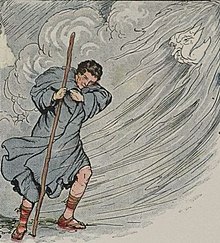
*image found here.

Thursday, February 14, 2013

Mohn ba se -- Valentines' Day

Valentines' day is not usually celebrated by any Wytni peoples.  They wait until around late March or early April to have their "then ba se" or "festival of love".  Today is Valentines' day here, though, so have a card!

                                                  "Mohnab lēian lēai ba se"                                                Day.acc to-you happy the love
                                                   Happy day of love to you!

Monday, February 11, 2013

Adventures in Arangothek

I started learning Arangothek the other day, just for kicks.  I've been around this language for some years now (I even sometimes blame the existence of Sandic on my having come across this conlang as a young child), and while I've glanced through its "Teach yourself"-styled manual, I've never actually sat down and invested time to learn it.

Arangothek is the language of Arangoth, a fictional country in a fictional world.  It is perhaps unique among fictional languages in that it is not only associated with a conworld, but that its conworld is one with which people regularly interact in IRC roleplaying.  #blkdragon*inn has existed since 1995, and Arangothek has been around since at least 1997.  Created by Pat Feaster, it's got a dictionary (two-way since three days ago when I got frustrated not being able to look up words on a whim offline) and some small to medium-sized texts translated by its author.  It used to have a more prominent role in the setting, but with people moving on who used to know it, it gradually fell out of use.

I've been following the lessons in the "Teach Yourself Arangothek" booklet that I printed, and yesterday I felt a familiar itch coming on.  A song was stuck in my head, and while I would normally translate it into Sandic to free it, it already existed in that language.  I *could* have just hummed it in Sandic and then let it go- but I decided to give it a shot in Arangothek.  Surprisingly, the words fit the first time!

Na nerre ai min an perpix
konnenet ve min
na nerre ai min ne siloth an perpix

"Mother carry me,
I am your child
Mother, carry me to the sea"

Then, today, I was watching the nasty weather outside, and hummed "rain rain go away" to myself in Sandic. Would Arangothek work for this song, I wondered?  I had to substitute tok ("water") for "rain" (as the more than decade-old dictionary was mum on this word), but yes it did!

na tok, ken an dalimbix,
ben hest degelta an issix!

"O water, run away!
come (back) a different day"

Tuesday, January 29, 2013

Kud ba tale:l ivi - Cauldron of changes

I've had a song stuck in my head for a good while now, and like all things that end up in there, it inevitably came out in Sandic form.

Here's a video of the song on the tube of yous, and a translation (singable!  tested it myself) version is below.  Perhaps I'll record me singing later and upload it.

What can I say?  I am a fan of repetitive chants.  They're meditative and relaxing, and great for humming innocuously at work without offending my rather devout coworkers. ;)  Add to the fact that repetition and successive loops of song are good ways to move past anxiety attacks, and you've got a music form that I adore.

Order of texts: Sandic -- Smooth English of Sandic -- Original English


kud ba talēl ivi
lēitha o yact,
rúmtda ba kala
hamar pal pela

ta kaxarain aŵahl
ta katarain aŵahl
ta usain aŵahl
ta kaxmasanin

--

Pot of the changing of everything
feather on bone,
the turning of eternity
circle at a stone

We are the ones who were
We are the ones who are
We are the who are known
The ones who learned

--

Cauldron of changes
Feather on a bone
Arc of eternity
Ring around a stone

We are the old people
We are the new people
We are the same people
Wiser than before.

Thursday, January 3, 2013

Ich weiß nicht was kommt


Bumping around youtube today, found a song that I liked.  It's originally in German, but I've translated it into English and Sandic below.

I don't really like the way I translated "there is nothing to lose" below (in Sandic).  It doesn't convey the proper meaning (and instead means something like "I will lose nothing"), but I can't figure out a good way to handle that kind of construction.  I'll have to come back to it.  It's singable, though.  Maybe once I get my new laptop...

Also, my English of the German doesn't quite close the loop properly.  In the original version, "Bin neugierig und freue mich auf das was zu mir kommt" is "I am curious and looking forward to what is coming to me", but "auf das was zu mir kommt brauche keine Angst" means "I do not need to fear what is coming to me".  I'm not sure there's a way to make both sentences work simultaneously in English like it does in the German. Just a heads-up.

Here're all the various translations of this song:

Order of texts: Sandic -- Smooth English of Sandic -- Original German -- Translated English

---

frn ba katetokai yneot sa, 
a felē yneot tem, 
daniab yteneot tofe, 
kasui yahl wî lēai yahl 

skra ba katetokai, 
felē oteneot tem, 
daniab yteneot tofe, 
kasui yahl wî lēai yahl

---

I do not know what will happen
But I am not afraid,
There is nothing to lose,
I am seeking and happy...

Because of what is to come
I should not be afraid
There is nothing to lose,
I am seeing and happy...

--

Ich weiß nicht was kommt
brauche keine Angst,
hab nichts zu verlieren,
bin neugierig und freue mich...

auf das was zu mir kommt
brauche keine Angst
hab nichts zu verlieren
bin neugierig und freue mich...

--

I do not know what comes
I need (not have any) fear,
I have nothing to lose,
I am curious and look forward to

That which is coming to me,
I need (not have any) fear,
I have nothing to lose,
I am curious and look forward to...

Saturday, December 15, 2012

Happy Xmas (War is over)

I heard this song* (originally, I think, by John Lennon) for the first time today and decided I'd translate it.  (Thanks, Colbert Report!)  It asks a really good question, of course- that being... "what have you done?"

Nothing new in this song, just the same old.  I had to rig the vocative just right to make it work (since it's an extra syllable and the translation below is singable, Oh Joy.)

*Sorry for this video.  It is surprisingly the only one with lyrics I could find that didn't have images of carnage.  ...Sigh.

Order of Texts: Sandic -- Smooth English of Sandic -- Original English

--
**


Ba mohn ân ora 
a kiab péxma
ba ivlú basem
rep juti baahl
ba mohn ân ora
opémas ra
lēé ta zumin, usein
lēé ta lēlain, nabein

mohnab lēaira
ivlúb lēai
wenai obaahl
temab kahami

ba mohn ân ora
lēian paelain, levin
kalēlétin, kahamin,
lenai ara aŵ
ba mohn ân ora
lēian mauin, glénin
lēian éoin, lēian pîrin,
otaŵneot madîjj.

dîjj batesem
ba wîc pé
dîjj batesem
nalēu

--

The day of giving,
but what have you done
the year is ending
it's the beginning of another one
the day of giving
be very happy
you who are here, you who are loved
you who are old, you who are young

A very happy day
a happy (new) year
let it be beautiful
and without fear

the day of giving
to you, the strong and the weak
the having and lacking,
our existence is wrong.
the day of giving
to you, the white and the black (ones),
to you the yellow (ones) and the red (ones),
let us not fight.

War will stop
(according to) your want
war will stop
now

--

So this is Xmas
And what have you done
Another year over
And a new one just begun
And so this is Xmas
I hope you have fun
The near and the dear one
The old and the young

A very Merry Xmas
And a happy New Year
Let's hope it's a good one
Without any fear

And so this is Xmas
For weak and for strong
For rich and the poor ones
The world is so wrong
And so happy Xmas
For black and for white
For yellow and red ones
Let's stop all the fight

War is over, 
if you want it
War is over 
now

** Image from here.

Wednesday, December 12, 2012

Lēé îbú - O moon


Last night as I was falling asleep, this song popped into my head.  It's yet another one from the CD of chants I had as a kid. Needless to say, I ended up scribbling it out in Sandic.

The picture below is of my actual writing-out of the song as I worked on it (at one in the morning, trying to get it out of my head so I could sleep).  I figured someone might get a kick out of seeing the actual messiness that translations can sometimes produce.

Yes, I write things down in Sandic script.  I've been doing it for so long that it's sometimes easier this way- particularly if I'm sleepy.

As to the formatting of the picture- yes, I know it's horrible and could do with some cropping.  I can't for the life of me figure out how to do it on a linux machine, though. I give up. It's seeable!  That's all I really care about.

The text on the left-hand is what appears below.  The text on the right side reads (albeit sideways) - "Lēé îbú iadkai / kabrelēi pal nât" ("O moon, helper / shining (there) outside").
(If you look closely, you can see that I forgot to dot the "a" on "pal" there, too.)

Order of texts: Sandic -- Smooth English of Sandic -- Original English

--

Lēé îbú iadkai
kabrelēi pal toa
fian opétaen
bamée ba marka

Lēé îbú kasai
ici pébrelē
fian opétamal
raactab opétaen

--

O moon, helper
shining up above
smile down to me
your face is showing

O moon (which) is knowing
you are shining silver
inspire me
shine truth (to me).

--

Moon, sister moon
Shining so high
Smile down upon me
Full face in the sky

Moon, sister moon
with your silver glow
Whisper your secrets
Tell me what you know